Most Men Know How to Train the Body. Few Know How to Listen to It.

TLDR:
Most high-performing men know how to train, discipline, and command the body, but fewer know how to listen to it.
Exhaustion is not always a scheduling problem. Sometimes it is a body-level signal being answered with mind-level control.
The body is not outside the performance system. Sleep, energy, tension, appetite, recovery, and emotional state all carry information.
Disconnection from the body often begins as survival, discipline, or responsibility, but over time it can create Systems Debt.
The October shift is Productivity Addict → Capacity Builder: stop treating the body as something to override and start treating it as part of the information system guiding sustainable performance.
You cannot rebuild your life from the neck up.
What Most men Don’t know about the Physical body.
High performing men know how to push it.
Discipline it.
Strengthen it.
Dress it.
Measure it.
Improve it.
Force it to perform.
But very few men actually know how to listen to what their body is telling them.
For leaders, that difference matters more than we realize.
Because your body is not just the thing carrying your ambition.
It is part of the information system showing you what your ambition is costing.
And if your calendar is organized but your body is still exhausted, the problem may not be your schedule.
The problem may be the relationship you have with the body carrying that schedule.

Why Your Calendar Is Not Fixing Your Exhaustion
When exhaustion shows up, a high-performing man usually reaches for the tools he trusts most.
A better calendar.
A tighter routine.
A cleaner checklist.
A stricter morning structure.
More discipline.
More consistency.
More control.
Those tools are not wrong.
But they have limits.
A calendar can organize your day.
It cannot undo months of self-override.
It cannot process emotion you have been outrunning.
It cannot downshift a body that has been living on alert.
It cannot restore a system you keep treating like an employee who refuses to obey.
Planning can organize the pressure.
It cannot always restore the body carrying it.
This matters because exhaustion does not stay neatly separate from performance.
A recent meta-analysis on sleep loss and executive function examined working memory, inhibitory control, and cognitive flexibility — all core capacities a leader relies on when making decisions under pressure.
For a leader, the body is not outside the performance system. It is part of it.
This is where many high-performing men misread the signal. They assume exhaustion means they need a better plan.
But sometimes exhaustion is not asking for another plan.
Sometimes it is asking for a different relationship.
So why is your calendar is not fixing your exhaustion?
You are trying to solve a body-level signal with mind-level control.
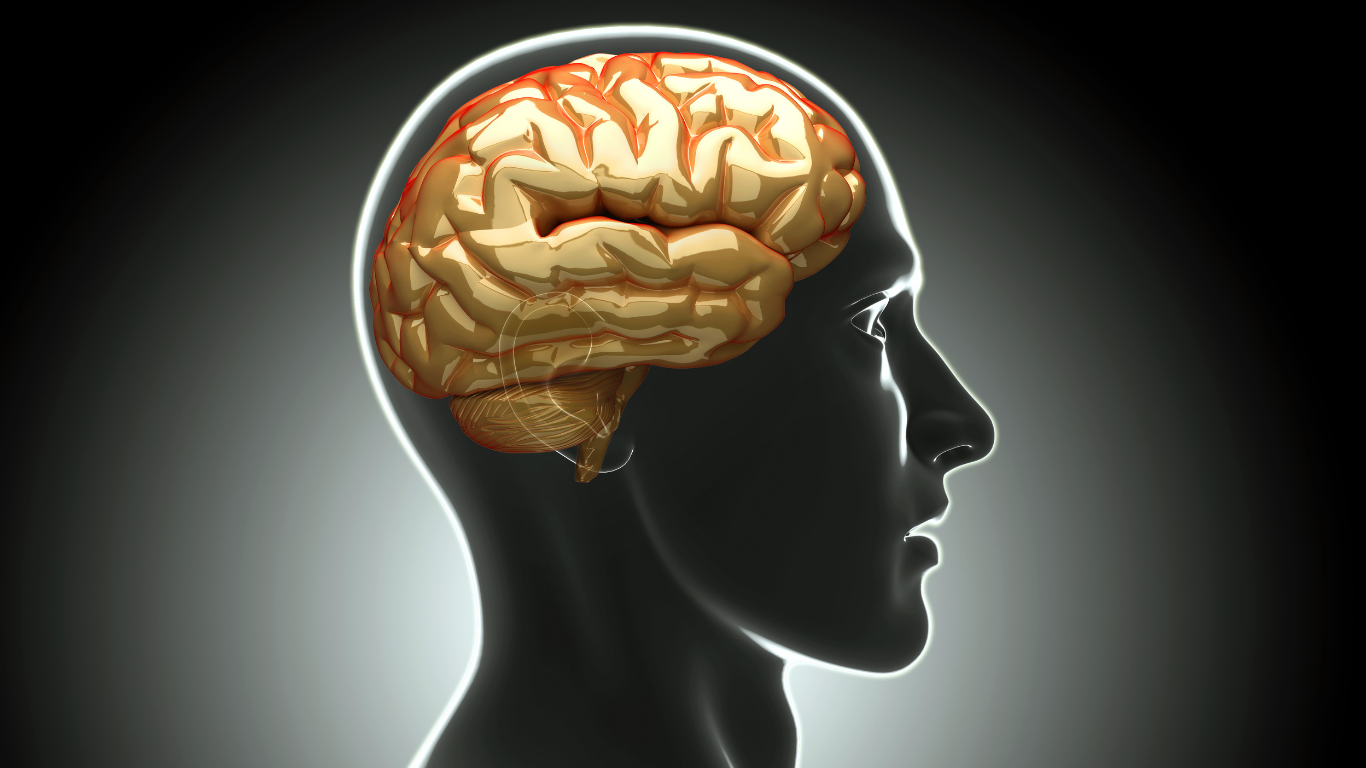
The Problem With Living From the Neck Up
Many high-performing men live almost entirely In their heads.
They are trained to value strategy, logic, planning, production, emotional containment, problem-solving, and the ability to override discomfort.
Those skills can create success.
But they can also train a man out of listening.
The mind becomes the command center.
The body becomes the labor force.
The mind gives orders.
The body is expected to comply.
So we push harder.
Sleep less.
Stay available.
Drink to come down.
Caffeinate to come back up.
Train hard enough to feel in control.
Ignore the signals until the system forces your attention.
That is not leadership of the body.
That is extraction.
A man can be highly disciplined and still be deeply disconnected from the body he is disciplining.
And when the body has been ignored long enough, it usually does not disappear.
It gets louder.
Sleep becomes lighter.
Energy becomes less predictable.
Recovery takes longer.
Patience gets thinner.
The mind refuses to shut off.
The body starts interrupting the mission…
Not because the mission is automatically wrong, but because the way the mission is being carried may be costing more than the system can sustain.

you canNot Rebuild your Life without acknowledging Your body first
I learned this the hard way…
For a long time, I lived almost entirely from the neck up.
Calendars.
Checklists.
Strategy.
Responsibility.
Control.
Even my body became something not to be acknowledged, but rather to be leveraged.
Something to push.
Something to train.
Something to dress.
Something to force through one more night out, one more shift, one more action item, one more period of pressure.
I knew how to keep moving.
I knew how to show up.
I knew how to make the plan, execute, carry the pressure, and tell myself I would recover later.
But later kept moving.
Until life stopped letting me override the signal…
After burnout, legal consequences, caring for family, trying to build a company, and working nights behind a bar, I had to learn something I had avoided for years:
I could not rebuild my life from the neck up.
Restoration started with the body.
Not because the mind did not matter.
But because my mind had been trying to manage a system my body could no longer carry.
my Mind had become the Master and my body it’s slave.
That realization changed how I approached everything: food, sleep, stress, work, recovery, environment, spiritual practice, and the way I listened to myself.
Muscle testing a.k.a Applied Kinesiology became one of the practices I experimented with as I started paying closer attention to how my body responded to food.
It may not resonate with everyone, and it may not work the same way for every person. But for me, muscle testing became a practical tool to do something I never thought possible before - the ability to communicate with my body.
Change the communication and you will changed the relationship.
Instead of asking only, “What do I want right now?”
I started asking, “What does my body actually need?”
During that broader period of listening, experimenting, and changing how I related to food, my weight dropped by more than 20 pounds.

The deeper shift was not another rigid food rule.
The deeper shift was that I stopped treating my body like something that existed only to obey me.
My body was not betraying me. It was warning me.
It was reporting the cost and misalignment of how I had been living.

Your Body Is Information, Not an Obstacle
The body is not merely physical equipment.
It is constantly giving you information.
Fatigue is information.
Tension is information.
Sleep quality is information.
Appetite is information.
Cravings are information.
Breathing is information.
Energy is information.
Emotional state is information.
The ability or inability to settle is information.
That does not mean every signal has one fixed meaning.
And it does not mean every sensation should become a command.
It means every signal deserves attention before you override it.
Research on interoception gives useful language to this. Interoception refers to sensing and becoming aware of internal body signals. A 2024 integrative review on interoception and mind-body interventions describes interoception as part of the bridge between physical responses, body awareness, and emotion regulation.
Many men are not disconnected because they are careless.
They are disconnected because disconnection helped them survive.
At one stage, ignoring the body may have helped you get through the launch, the grief, the financial pressure, the family crisis, the company build, or the season when stopping did not feel possible.
But what helped you survive one season can become the pattern that prevents recovery in the next.
This is one way the cost my Phoenix system describes as Systems Debt can become harder to ignore.
In scientific language, one related concept is allostatic load: the cumulative burden created when the body repeatedly adapts to stress over time. Phoenix’s Systems Debt is broader than physiology alone, but allostatic load reinforces the same practical point: chronic compensation has a cost.
The external life keeps demanding output, but the internal system is no longer resourced enough to carry the load without compensation.
So, we as men, are tempted and even encouraged to over compensate.
More discipline.
More urgency.
More caffeine.
More control.
More self-command.
Until the body starts asking for something the calendar cannot provide:
Attention.

Learning to Listen Again
Sometimes the work is not only About responsibility.
Sometimes the work is also the escape.
So a man stays mental.
He analyzes.
Strategizes.
Distracts.
Numbs.
Consumes.
Optimizes.
Creates another plan.
Because when he actually returns to the body, he may meet what he has been outrunning.
Grief.
Anger.
Fear.
Shame.
Exhaustion.
Loneliness.
Pressure.
The old story he never had time to metabolize.
This is why returning to the body is not always comfortable.
If thoughts are the language of the mind and emotions are the language of the body, then we, as men, were never trained to be truly at peace in our body.
Instead of understanding what the body is telling us we’ve been conditioned father to son, generation to generation, to distract, numb or avoid that inner world altogether.
And it’s my belief that men around the globe are operating only at half capacity when they view the body from this perspective.
It is not just relaxation. Sometimes it is revelation.
Different men find their way back into contact with themselves through different practices: coaching, therapy, movement, meditation, breathwork, bodywork, nature, somatic work, spiritual practice, shadow work, acupuncture, muscle testing, sound, or other forms of personal exploration.
The point is not that every method works for every person.
The point is to stop assuming the mind gets the only vote.
As you start paying attention, you may notice that environment, movement, sound, pace, food, and sensory load affect how easy or difficult it is for your body to settle.
A place can be beautiful and still demand more from your system than you realize.
Research on nature exposure supports the broader idea that environment can influence stress and recovery. One systematic review evaluated the effect of nature exposure on stress using both physiological markers and self-report measures.
A routine can be impressive and still be depleting.
A habit can look disciplined and still disconnect you from the body you are trying to lead.
Different traditions use different maps to make sense of the mind-body relationship.
Some speak in the language of stress physiology, body awareness, or nervous-system regulation. Others speak in the language of energy, meridians, frequency, vibration, or spiritual healing.
Teachers such as Dr. Joe Dispenza and Dr. Bruce Lipton have helped many people think more deeply about the relationship between mind, body, belief, environment, and transformation.
You do not have to adopt every explanation to become more curious about your own experience.
Movement, nature, bodywork, meditation, sound, acupuncture, breathwork, spiritual practice, or other forms of exploration may become experiments rather than prescriptions.
The question is not:
“Which modality is universally correct?”
The question is:
“What reliably increases friction in my system?”
And:
“What seems to help me recover capacity?”
Maybe walking without headphones helps you hear yourself again.
Maybe strength training becomes less about punishment and more about presence.
Maybe nature gives your body a signal that the city never does.
Maybe acupuncture or bodywork helps you notice where you have been holding tension.
Maybe binaural beats, frequencies, or soundscapes help your body downshift while working, resting, or preparing for sleep.
Maybe muscle testing helps you experiment with asking your body what it needs.
None of this has to become dogma.
But it can become life-changing data for those willing to listen.
fact:
Your body can give you information before your mind has a clean explanation for it.
so The experiment is simple:
Stop asking only, “What do I want?”
Start asking, “What does it sense like my body needs?”
And then actually do it.
Test it. Do you feel better or worse?

Productivity Addict → Capacity Builder
The October shift is:
Productivity Addict → Capacity Builder
A Productivity Addict treats the body as something to command.
A Capacity Builder treats the body as information to understand.
The Productivity Addict asks:
“How do I force more output?”
“How do I stay consistent?”
“How do I push through?”
“How do I optimize my schedule?”
“How do I override this signal and keep moving?”
The Capacity Builder asks:
“What is my body telling me?”
“What signal have I been ignoring?”
“What does restoration require now?”
“What environment helps my system settle?”
“What am I using to numb instead of recover?”
“What would change if I stopped commanding my body and started listening to it?”
This is not about becoming less ambitious.
It is about building the somatic infrastructure required to carry ambition without abandoning large parts of yourself in the process.
The goal is not less ambition.
The goal is a body capable of carrying the mission.
And Capacity is not created by overriding the signal.
Capacity is created by understanding it.

WRap Up: Your Body Is Not the Problem
If your calendar is organized but your body is still exhausted, listen to that signal.
The answer may not be another schedule, another productivity system, or another attempt to force yourself into compliance.
Your body may be asking for a different relationship.
Not less responsibility.
Not less ambition.
Not less leadership.
A different relationship.
One where the body is not just used, commanded, decorated, trained, or ignored.
One where the body becomes part of the information system guiding how you live, work, recover, decide, and lead.
Most men know how to train the body.
Fewer know how to listen to it.
But in the new world emerging, the next stage of your life, it may require both.
You cannot rebuild your life from the neck up.
Your body is not the problem.
It is the messenger.
If your body has been sending signals you can no longer ignore, the answer is not another productivity tactic.
It is a deeper reset.
Watch the Core Training to see how the Phoenix Reset Protocol helps high-performing men identify Systems Debt, restore capacity, and rebuild the operating system underneath exhaustion.