The Year-End Burnout Trap: Why Unfinished Goals Trigger Self-Judgment — and How to Break the Cycle

TLDR:
December amplifies year-end burnout, especially for high-performing men — the 20% who create 80% of results.
89% of adults experience elevated stress during the holidays due to emotional and social obligations (APA, 2023).
Financial stress peaks in December, making it the most financially pressured month for professionals (Forbes, 2020).
Three mindsets — The Cynic, The Escapist, and The Perfectionist — destabilize all Phoenix 4 Core Elements (Body, Mind, Personal Environment, Professional Environment).
Conscious Closure + Non-Judgment (Gratitude → Curiosity → Compassion) resets the nervous system so men enter January aligned, not exhausted.
The Season of Reflection — or the Season of Collapse
December is positioned as a month of celebration — but for high-performing men (the top 20% who create 80% of results), it becomes a private audit of the entire year.
According to the American Psychological Association, 89% of adults report elevated stress during the holiday season, driven by social obligations, family dynamics, and year-end demands (APA, 2023).
Financial stress peaks too — December is the most financially pressured month of the year, with gift-giving, travel, and year-end costs stacking on top of professional responsibilities (Forbes, 2020).
But the real source of year-end burnout is simpler:
Burnout is felt in the body but fueled by the mind — and December is when that mental fuel burns hottest.
This is when unfinished goals echo the loudest, when perfectionism and comparison resurface, and when high performers slip into quiet self-judgment.
You don’t “fail” in December — you spiral because the mind attacks the gap between expectation and reality.
Baumeister’s research shows the brain treats unfinished tasks like “open loops,” intensifying intrusive thoughts and activating stress pathways that drain mental energy.
While the world winds down, high-performing men wind up — silently.
But as Viktor Frankl wrote:
“Between stimulus and response, there is a space. In that space is our power to choose our response.”
This blog is about reclaiming that space — so you don’t carry this year’s emotional residue into the next.

The Psychology of Unfinished Goals: Why December Hits Men the Hardest
Most high-performing men don’t burn out because the year was bad.
They burn out because the mind fixates on what wasn’t finished.
This is the Zeigarnik Effect:
Unfinished goals create mental tension, intrusive thoughts, and elevated stress markers.
High performers tie identity to achievement, so the gap between “what I did” vs. “what I should have done” becomes a source of attack.
The APA confirms men are:
• 27% less likely to acknowledge burnout
• more likely to push through exhaustion
• more likely to interpret stress as personal failure (APA Report)
This creates a predictable descent down the Phoenix Emotional Energy Ladder:
Pressure → Frustration → Doubt → Shame → Collapse
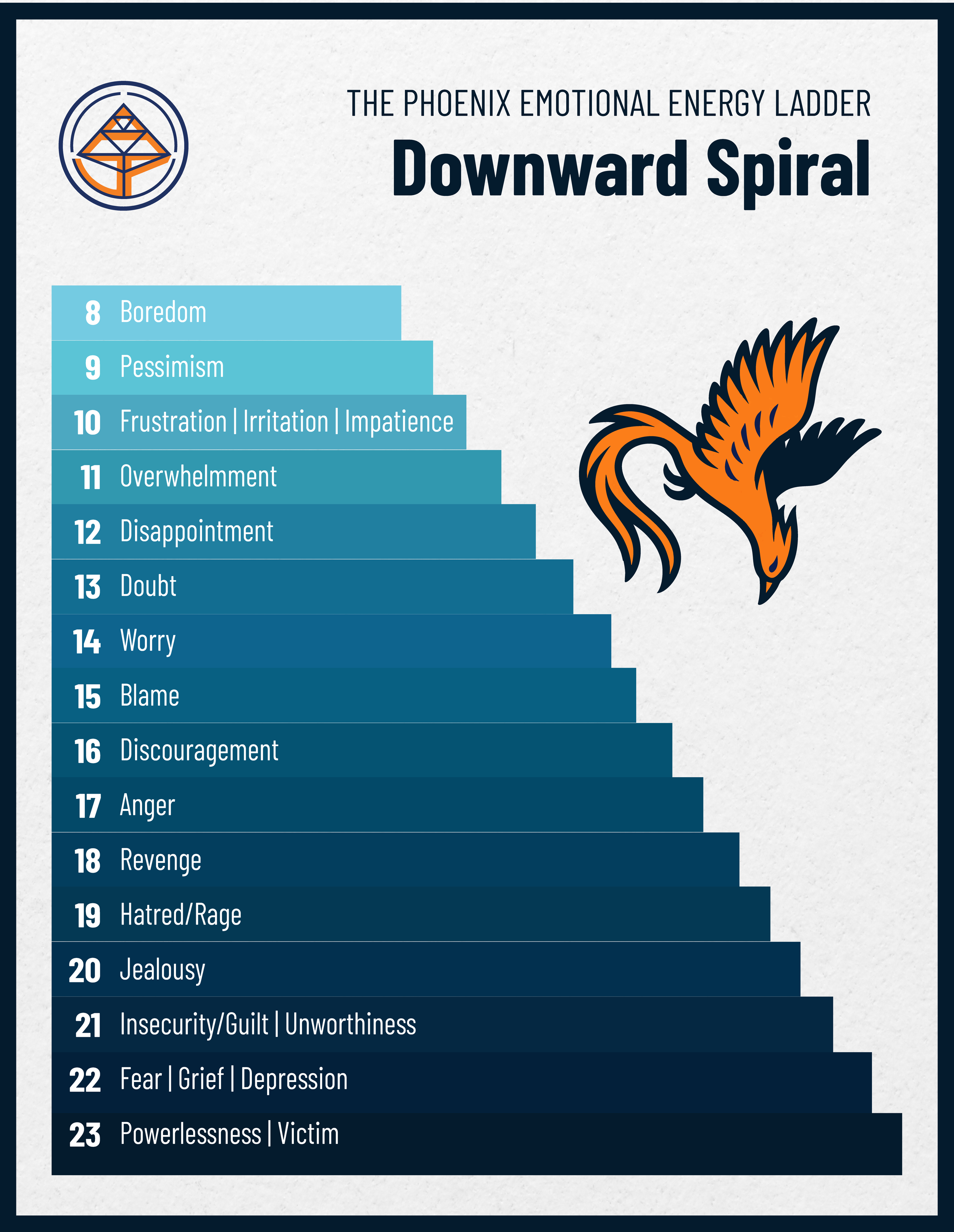
This visual shows how negative emotions compound and accelerate downward when left unchecked.
Downward Emotional Energy Ladder
This isn’t “just a rough month.” It’s a physiological response to psychological overload — the true engine of year-end burnout.

The Three Burnout Mindsets Triggered in December (The Cynic, The Escapist, The Perfectionist)
December doesn’t create burnout — it activates the mindsets that fuel it.
1. The Cynic — “Whatever. None of this mattered anyway.”
This is emotional exhaustion disguised as logic.
Maslach’s burnout framework identifies cynicism as one of the three core dimensions of burnout.
Why it drains:
• Detachment
• Emotional withdrawal
• Loss of purpose
Ladder pattern: Apathy → Hopelessness → Collapse
2. The Escapist — “I’ll deal with this next year.”
Avoidance replaces clarity.
The NAMI 2025 Workplace Mental Health Report found:
• 42% fear career consequences if they admit mental strain
• 1 in 4 considered quitting due to mental exhaustion (NAMI)
Why it drains: Avoidance builds pressure, fuels fear, and erodes confidence.
Ladder pattern: Stress → Fear → Shame
3. The Perfectionist — “I didn’t do enough.”
The most destructive December mindset.
Forbes and APA both show that December is the peak month for emotional and financial pressure.
Why it drains: Perfectionism attacks identity.
Ladder pattern: Pressure → Anxiety → Guilt → Collapse

How These Mindsets Create System-Wide Burnout Across the Phoenix 4 Core Elements
Burnout is never one problem. It’s a breakdown across all four energetic structures:

Body (Water) — regulation, rest, physical resilience
Mind (Air) — clarity, mental load, self-concept
Personal Environment (Earth) — relationships, home, emotional habitat
Professional Environment (Fire) — deadlines, output, expectations
December is the only month where all four intensify at once.
This is why high-performing men feel:
• Productive but disconnected
• Successful but empty
• Exhausted but unable to slow down
Year-end burnout is not a failure of effort — it’s a failure of alignment.

Conscious Closure: How to Reflect, Release, and Reset Before the New Year
Conscious Closure is the antidote to year-end burnout. It is the practice of creating intentional space between what happened and what you make it mean.
The Process: Reflection → Release → Reset
1. Reflection — Understanding Without Judgment
Baumeister’s work shows the brain sees unfinished tasks as “open loops,” creating stress until they are resolved — or understood.
Reflection questions:
• What truly mattered?
• Which goals were aligned vs. imposed?
• What patterns kept repeating?
Reflection lifts you into Curiosity — the emotional pivot.
2. Release — Clearing Emotional Residue
Letting go is nervous-system regulation.
Release dissolves:
• misaligned goals
• unrealistic expectations
• guilt
• pressure
This rebalances Body (Water) + Mind (Air).
3. Reset — Rebuilding Inner State
Reset reconnects all four core elements:
• Water (Body): sleep, recovery
• Air (Mind): clarity, coherence
• Earth (Personal): grounding, relationships
• Fire (Professional): intentional prioritization
Most men skip Reset — which is why they repeat the same burnout cycles by February.
It’s not how you finish; it’s how you close.
Non-Judgment - The Gateway to Renewal
Self-judgment is the #1 emotional driver of December stress and year-end burnout.
Non-judgment is not approval.
It is neutrality — the internal space where you stop attacking yourself.
Rebuilding that space requires…
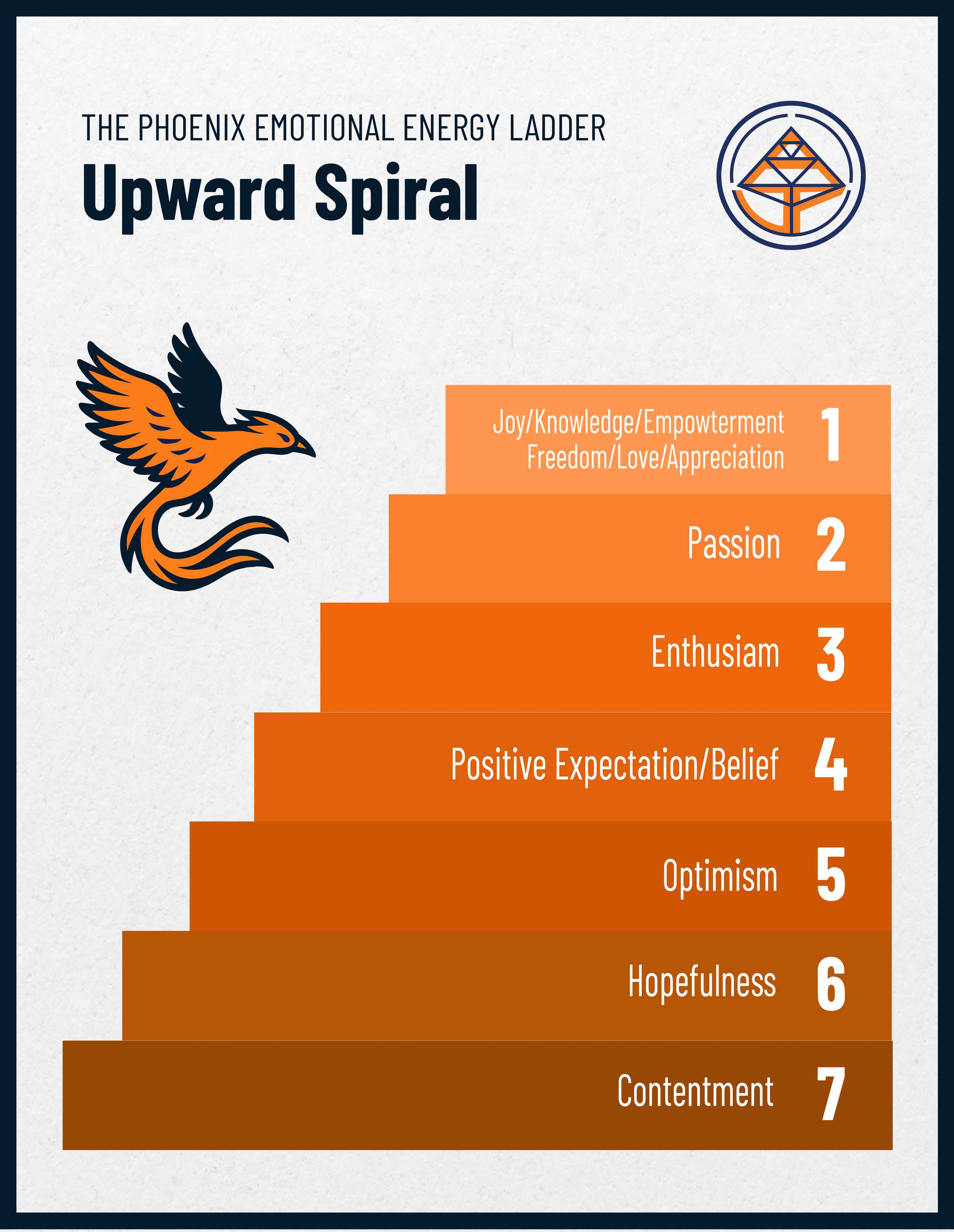
This visual represents the emotional states we move into when we consciously shift toward curiosity, compassion, and alignment.
Gratitude → Curiosity → Compassion
These three states reverse the downward spiral and move you upward on the Phoenix Emotional Energy Ladder.
Gratitude — Interrupts the Fall
Creates emotional bandwidth and interrupts the threat response.
Curiosity — Stops the Judgment Loop
Moves you from self-attack → awareness → acceptance.
Compassion — Turns Data Into Wisdom
Research by Kristin Neff shows self-compassion increases motivation, resilience, and emotional regulation more effectively than self-criticism (PositivePsychology.com).
Together, these reset:
• Water (Body)
• Air (Mind)
• Earth (Personal)
• Fire (Professional)
and create the emotional foundation for January.
Wrap Up:
High-performing men — the 20% who create 80% of results — suffer most during December because they demand the most from themselves.
Year-end burnout isn’t weakness.
It’s the predictable outcome of carrying more than most people can imagine.
But you can choose something different.
Gratitude interrupts the fall.
Curiosity stops the judgment.
Compassion restores your power.
When you close consciously, you rise differently.
Think December is draining you? Take the Burnout Quiz below to find out.