The January Pressure Trap: Why High Performers Burn Out Before February

TLDR:
January Trap: 80% abandon resolutions by week 2 of February; high performers hit “Quitter’s Day” (Jan 14) hardest due to overcommitment.
Holiday Hangover: 2/3 overeat, 1/3 drink more (NYE tops charts), spiking stress for 41% into January.
Burnout Reality: 52% of top performers hide strain; 72% of workforce stressed, with leaders most at risk.
Phoenix Fix: Reframe stress as challenge, build habits via context (not willpower), fast sustainably post-holidays.
Your Move: Quiz pinpoints depleted elements (mindset/physiology/environment) for steady execution without crash.
January is marketed as a fresh start, but for high performers it functions more like a performance trap.
If you’re the kind of man who produces 80% of the results—the vital few—you can’t use the same goal-setting strategy as everyone else.
Because you’re not carrying the same weight. pmc.ncbi.nlm.nih
In the U.S., that “fresh start” comes right after a six-week gauntlet: Thanksgiving in late November, then Christmas, then New Year’s—each with its own financial, family, and social demands layered on top of year-end work. Surveys from mental health organizations and professional associations show that around four in ten adults report higher stress during this November–January window, and many say it interferes with their ability to actually enjoy the holidays. ansi +3
And this isn’t only an American problem.
Cross-country polling on New Year’s resolutions in places like the US, UK, and Canada finds that people everywhere load January with major health, money, and lifestyle goals—even as many say they would prefer smaller, sustainable changes over time. The culture points you toward a sprint right after a marathon. sago +1
So you do what high-performing men do: you commit.
Bigger goals. Tighter schedules. Less margin. More intensity.
And then the drop-off hits.
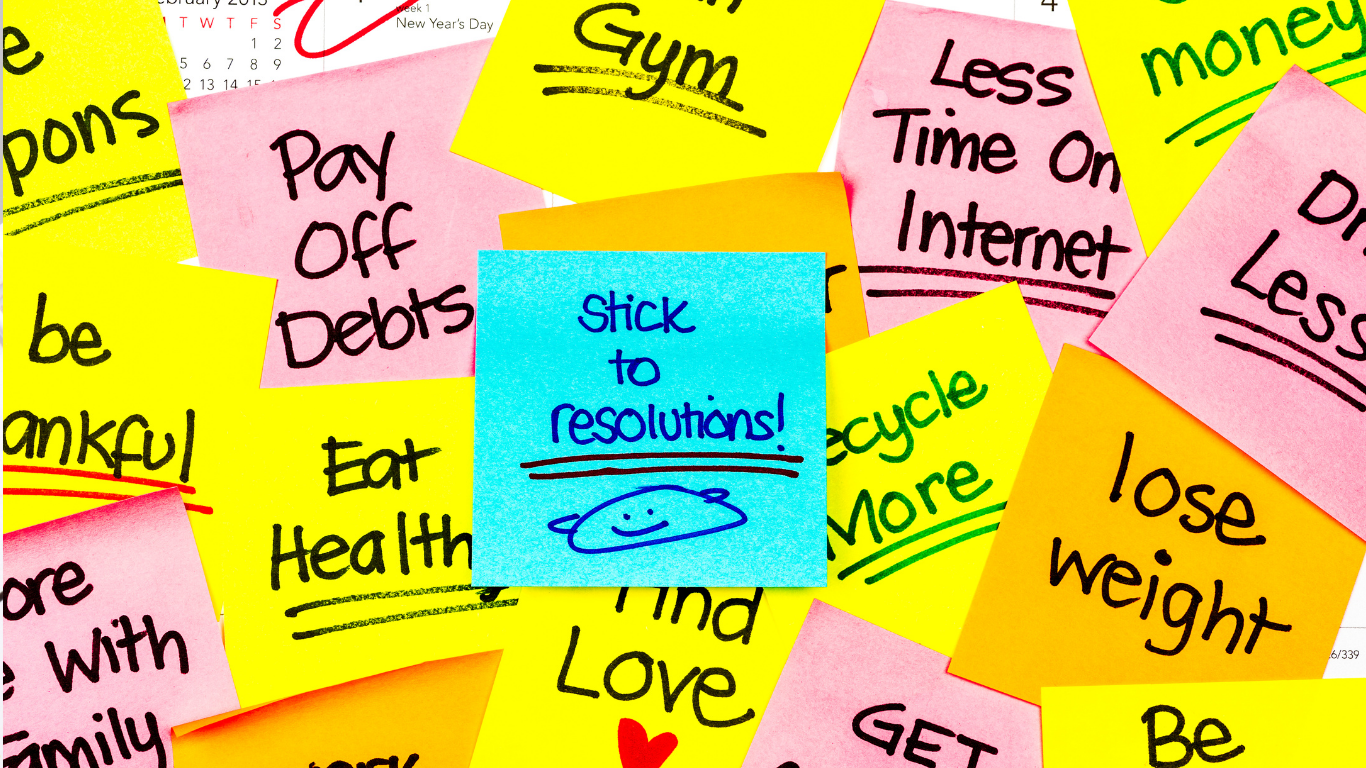
Why New Year Resolutions don’t work for Most high-performing men
A large-scale experiment on New Year’s resolutions found that while most people report staying on track in the first week, only about 55% say they are still keeping their resolution after one month. A more recent survey of American adults reported that roughly half of those who set resolutions had abandoned them by the end of February, with a large chunk quitting in January alone.
That falloff is not a moral failure; it’s a design problem. pmc.ncbi.nlm.nih +2
By February, many high performers aren’t just “off track”—they’re back in a familiar spiral:
What’s wrong with me?
Why can’t I stay consistent?
Why do I always fall off?
The truth: a lot of men don’t abandon their goals because they lack discipline. They abandon them because the plan never matched their actual energy and environment. pmc.ncbi.nlm.nih
Most January resolutions are output plans—a Fire plan. They assume your body can absorb extra stress, your mind will stay sharp, and your personal and professional worlds will cooperate. In other words, they assume unlimited fuel. apa
When that fuel runs low, the mind steps in with self-judgment. Burnout is felt in the body and heavily fueled by how the mind interprets stress; research links burnout not only to physical exhaustion and brain changes, but also to chronic negative appraisal and emotional strain. Once your brain labels a normal setback as a character flaw, your nervous system experiences it as threat. Motivation collapses, recovery disappears, and consistency turns into a fight instead of a byproduct. pmc.ncbi.nlm.nih +3
Your brain also keeps unfinished goals running in the background. Studies on goal pursuit show that unresolved tasks remain cognitively active and can intrude on attention until you either complete them or create a specific plan, a phenomenon that feels like mental “open loops.” Stack aggressive January goals on top of an already noisy mind and depleted system, and you’re not starting fresh—you’re overloading an already maxed-out circuit. wfu +1
In a better world, January wouldn’t be the month you sprint…
It would be the month you recalibrate—so you can build goals aligned with your values, supported by your environment, and sustainable in your body. pmc.ncbi.nlm.nih
This blog is about that shift: New Year, Aligned You.
Not “start strong.” Start aligned—so you don’t arrive in February exhausted, discouraged, and blaming yourself.

Why January Overcommitment Is a Nervous System Problem, Not a Discipline Problem
Many high-performing men don’t fall off in January because they suddenly became inconsistent. They fall off because January is the month they ask their system to do the most right after it has had the least true recovery. apa
You come out of the holidays with residual stress, disrupted routines, irregular sleep, and the psychological weight of “this year has to be different.” Then the pressure stacks fast: Q1 expectations, financial goals, family demands, and the internal order to be “on” immediately. On paper, your new plan looks impressive. In reality, it doesn’t match your capacity. afsp +1
When adherence inevitably drops, high performers rarely treat it as neutral feedback about the plan. They treat it as a verdict about themselves. That verdict is what turns a normal wobble into burnout fuel. pmc.ncbi.nlm.nih
If burnout is felt in the body and fueled by the mind, then self-judgment becomes a chronic stressor. Research on burnout and stress shows that how people appraise demands—threat vs. challenge, self-attack vs. self-support—shapes both physiological load and emotional exhaustion. When missing a habit becomes “I’m weak,” the nervous system hears danger, not motivation. Recovery decreases, sleep quality erodes, patience shrinks, and staying consistent starts to feel like fighting your own biology. psychologicalscience +4
The hidden mechanism: unfinished goals as “open loops”
Unfinished goals don’t simply vanish when you stop working on them. Experimental work by Masicampo and Baumeister shows that unfulfilled goals stay mentally active, increasing intrusive thoughts and cognitive interference until you either complete them or form a concrete plan. That is the open-loops effect. pubmed.ncbi.nlm.nih +1
So if January is full of ambitious goals that don’t match your capacity, your brain ends up running dozens of unfinished loops in the background. You feel “busy” even when you’re not actively doing anything, because your cognitive bandwidth is fragmented. planningwithchloe.substack
In a better world, January is calibration—not acceleration
In the Phoenix System, January’s job isn’t to make you sprint; it’s to rebuild baseline so later effort has a stable platform.
Most January planning happens only in Professional Environment (Fire): output, urgency, performance. But Fire is only clean when the other elements are stable:
• Body (Water): sleep, recovery, nervous system regulation
• Mind (Air): clarity, self-talk, cognitive load
• Personal Environment (Earth): routines, boundaries, support
• Professional Environment (Fire): execution and momentum
Research on burnout and recovery emphasizes that sleep, recovery, psychological detachment, and supportive environments are key buffers, not extras. If Water, Air, and Earth are unstable, then adding more Fire doesn’t create high performance. It creates burnout. frontiersin +1

2. The Real Reason High Performers Overcommit in January: Confusing Pressure With Purpose
January pressure is seductive because it masquerades as purpose. It feels clean, productive, and righteous—like finally getting serious.
But pressure and purpose are not the same.
Pressure is external: the calendar, workplace culture, social feeds, and the “new year, new you” narrative demanding proof. Purpose is internal: your values, direction, and the kind of yes that still leaves you with energy at the end of the day. red.msudenver +1
Many high-performing men don’t overcommit because they are reckless. They overcommit because pressure triggers an identity reflex:
“If I’m not accelerating, I’m falling behind.”
That reflex shapes how goals get built:
• more habits
• more volume
• more output
• less rest
• less margin
It looks powerful in a notebook. It breaks when real life shows up.
Resolution studies illustrate how fragile pressure-driven goals are: initial commitment is high, but adherence drops substantially over the first months, with only about half reporting they are still keeping their resolution at one month and fewer at later follow-ups. For high performers whose identity is tied to execution, that drop doesn’t read as “plan miscalibrated”; it reads as “I failed.” journals.plos +2
When a pressure-based goal slips, the inner dialogue shifts from strategy to self-attack:
• “I missed a day” becomes “I’m inconsistent.”
• “I fell off” becomes “I always do this.”
• “This is harder than I expected” becomes “Something’s wrong with me.”
At that point, burnout accelerates—not just from workload, but from the mental narrative that turns perfectly normal friction into self-criticism. pmc.ncbi.nlm.nih +1
Purpose stabilizes. Pressure burns.

Body (Water) — regulation, rest, physical resilience
Mind (Air) — clarity, mental load, self-concept
Personal Environment (Earth) — relationships, home, emotional habitat
Professional Environment (Fire) — deadlines, output, expectations
3. The Phoenix 4 Core Elements: The Missing Layer in January Goal-Setting
Most goal-setting advice plans for output and nothing else. It treats your life like a machine: set a target, apply discipline, repeat. But your results are not produced by willpower in a vacuum. They are produced by a system.
That is why so many January goals collapse when life gets real: they are usually built in one lane—Professional Environment (Fire)—while ignoring the three elements that determine whether execution is sustainable.
In the Phoenix System, alignment starts by recognizing the two worlds you manage all the time.
The Inner World
• Body (Water): energy capacity, recovery, nervous system regulation, physical resilience
• Mind (Air): clarity, focus, self-talk, identity, emotional state
The Outer World
• Personal Environment (Earth): home, relationships, boundaries, routines, emotional habitat
• Professional Environment (Fire): deadlines, responsibility load, output expectations
Why systems matter more than motivation
Habit research shows that people tend to repeat the same behaviors automatically in stable contexts, especially under stress, because context cues trigger routines with minimal conscious effort. In other words, environment quietly runs the show. fraw +2
If you set January goals without adjusting context (Earth and Fire) and without supporting capacity (Water and Air), you are asking motivation to do the job that systems should be doing. The goal doesn’t fail in your calendar app; it fails in your system.

4. The Aligned Goal Filter: How to Stress-Test Any Goal Before You Commit
If you want goals that survive February, you need a filter that protects energy—not just ambition. Before you commit to any goal, run it through these four elements.
Body (Water): Can my physiology sustain this?
Ask:
• What will this cost in recovery, sleep, training load, or stress each week?
• What needs to be true about my body for this to be sustainable?
• What is my Minimum Standard on low-energy days?
Rule: If your body cannot sustain it, your mind will eventually weaponize it.
2. Mind (Air): Is this coming from values—or pressure?
Ask:
• If nobody saw this goal, would I still want it?
• Which value does this goal express?
• Am I pursuing this because it is aligned, or because I am proving something?
Rule: If the goal requires self-attack to maintain discipline, it is not aligned.
3. Personal Environment (Earth): Does my life structure support this?
Ask:
• What boundary has to exist for this goal to be real?
• What needs to shift in my routines?
• What must be removed to create space?
Rule: If your personal environment is unstable, your goal will compete with chaos.
4. Professional Environment (Fire): Is this leverage—or just more work?
Ask:
• What is the smallest high-impact action that moves the needle?
• What can be delegated, automated, or delayed to protect energy?
Rule: If your professional world runs on constant urgency, your personal goals become collateral damage.

5. The January Reset: 3 Exercises That Make Goals Survive Past February
If you are a high-performing man—the 20% producing 80% of results—your biggest risk in January is not lack of ambition. It is overcommitment without alignment. pmc.ncbi.nlm.nih
Before you add more goals, build the foundation that makes the Aligned Goal Filter real. These three exercises restore clarity, direction, and energy—the inputs most New Year plans ignore.
Exercise 1: Reflection
Ten-minute prompts:
• What were my three biggest wins—and what did they cost me in energy?
• Where did I perform well but feel misaligned?
• What do I need to stop doing immediately?
• What would make this year feel like a win even if nobody applauded it?
Exercise 2: Establish What Matters (Core Values)
Core Values Drill:
1. Write ten values you respect.
2. Circle the five you actually lived last year.
3. Narrow to three non-negotiables for 2026.
Then run every goal through:
• Which value does this goal express?
• Will it increase or drain my energy?
• If I succeed but violate my values, is it still success?
Exercise 3: Fasting (Energy Reset)
Fasting in January serves a dual purpose. For many people, the weeks between late November and New Year’s bring more food, more sugar, and more alcohol than usual; studies on holiday eating and drinking show clear spikes in intake during the winter holidays, with New Year’s Eve among the heaviest drinking days of the season in general-population data. Using a gentle fasting window in January helps your physiology reset after that stretch instead of asking an already overloaded system to carry even more. pmc.ncbi.nlm.nih +3

Fasting can also be a powerful reflective practice.
Across cultures and history, people have used periods of not eating to create mental clarity, emotional focus, and spiritual insight, from Greek philosophers and early physicians to major religious traditions that fast as a way to reconnect with what matters. Treating a simple time-restricted eating window as a short daily “container” can support the kind of quiet, honest reflection you are doing in Exercises 1 and 2. polarlight +2
Choose one time-restricted structure (examples):
• 12:12 – 12 hours fasting, 12 hours eating (e.g., finish eating by 7 p.m., first meal at 7 a.m.) mylevel2 +1
• 14:10 – 14 hours fasting, 10 hours eating (e.g., eat between 10 a.m. and 8 p.m.) hy-vee +1
• 16:8 – 16 hours fasting, 8 hours eating (e.g., eat between 11 a.m. and 7 p.m.) zoe +2
Keep it sustainable:
• Start with consistency, not intensity; begin with 12:12 or 14:10 and only lengthen if your body responds well. veri
• Prioritize hydration during the fasting window.
• Break your fast with protein-forward food to stabilize energy.
• If fasting disrupts sleep, mood, or increases anxiety, scale down and reconsider the structure.
Important health note: Anyone with diabetes, a history of eating disorders, or medical conditions or medications affected by food intake should discuss fasting with a clinician first, as medical guidance recommends personalizing fasting to health status. pubmed.ncbi.nlm.nih

6. The February-Proof Standard: Measuring Progress Without Self-Criticism
Many high-performing men do not lose momentum in February because they suddenly lack discipline. They lose it because they turn normal friction into a verdict about who they are. pmc.ncbi.nlm.nih +1
So you need a different metric.
The Phoenix Standard: Track alignment, not perfection
Once per week, rate each element from 1–5:
• Body (Water): sleep, recovery, training, regulation
• Mind (Air): clarity, focus, self-talk, emotional steadiness
• Personal (Earth): boundaries, relationships, home stability
• Professional (Fire): priorities, leverage, urgency control
Then ask:
1. Which element is lowest?
2. What one adjustment would raise it by a single point next week?
Minimum Standard is a win. Continuity compounds.
When you feel the spiral starting, ask:
What would a calm, self-respecting leader do next?
Wrap Up: New Year, Aligned You
High-performing men suffer most during January because they demand the most from themselves.
If you are a high-performing man—the 20% producing 80% of the results—January will either set you up for sustainable momentum or repeat the same cycle: overcommit, burn through energy, then punish yourself when reality hits. Resolution data shows how common that cycle is, with adherence dropping sharply after the first weeks of the year. useorigin +3
This year, the objective is not to start strong. It is to start aligned.
Use the Phoenix approach:
• Strengthen the inner world: Body (Water) and Mind (Air).
• Stabilize the outer world: Personal (Earth) and Professional (Fire).
• Recalibrate weekly so you stay consistent without self-attack.
The real flex is not raw intensity. It is emotional mastery, clean execution, and the ability to stay steady when pressure rises. brainfacts +1
If January already feels heavy—or you sense the February crash coming—take the Burnout Quiz to pinpoint which Phoenix element is most depleted right now and what to address first.
Get Aligned. Take the Burnout Quiz below to find out.